
Herbalife Tea (Instant Herbal Beverage): Caffeine, Ingredients and Every UK Flavour
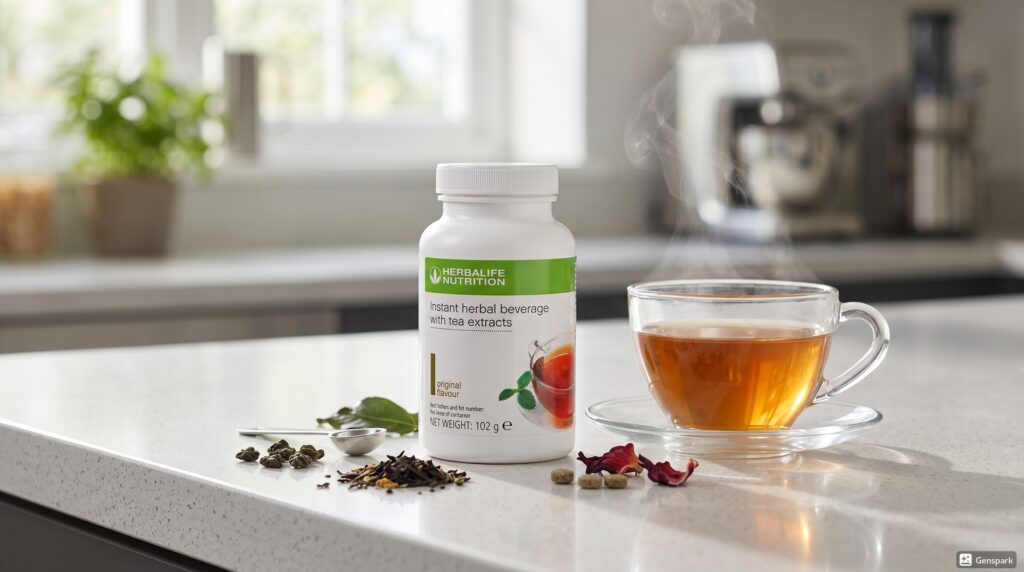
Herbalife Tea (Instant Herbal Beverage with Tea Extracts) is a low-calorie powdered drink made from Orange Pekoe black tea, green tea extract, hibiscus flower powder and cardamom seed extract, providing 87.5mg of caffeine and 6 calories per serving. It’s manufactured by Herbalife International of America, Inc. in Winston-Salem, North Carolina, and comes in five flavours across two pack sizes in the UK.
Its one authorised claim (GB Nutrition and Health Claims Register) is that caffeine helps improve alertness and concentration — this guide sticks to that, and to real UK label data, rather than the “fat-burning” language sometimes seen online.
Quick Summary
- 87.5mg caffeine and 6 calories per 1.7g serving, across all flavours.
- Authorised claim: caffeine helps improve alertness and concentration. There is no authorised claim about fat burning, metabolism, or weight loss.
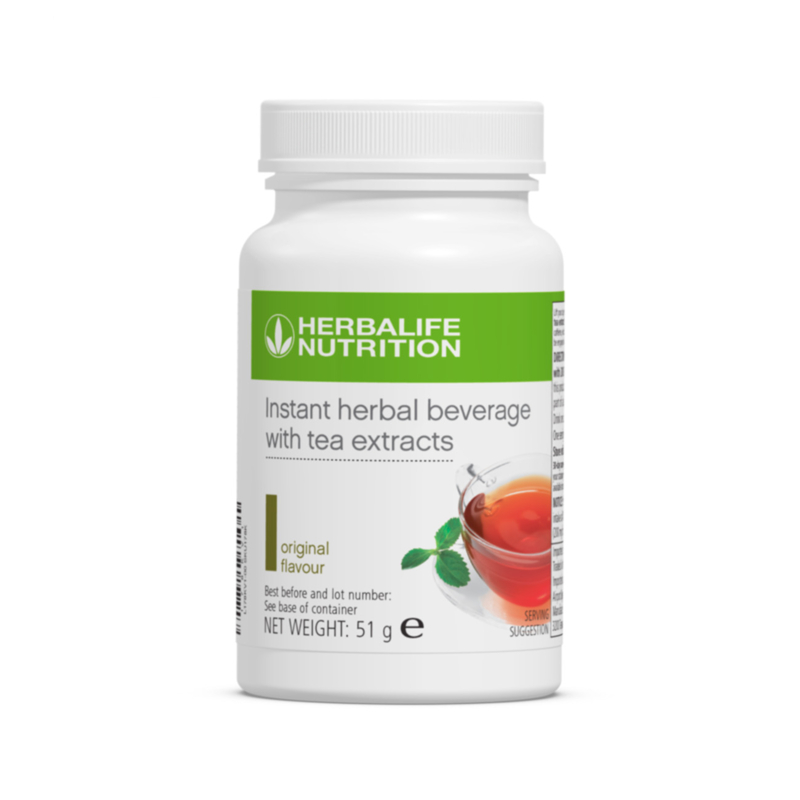
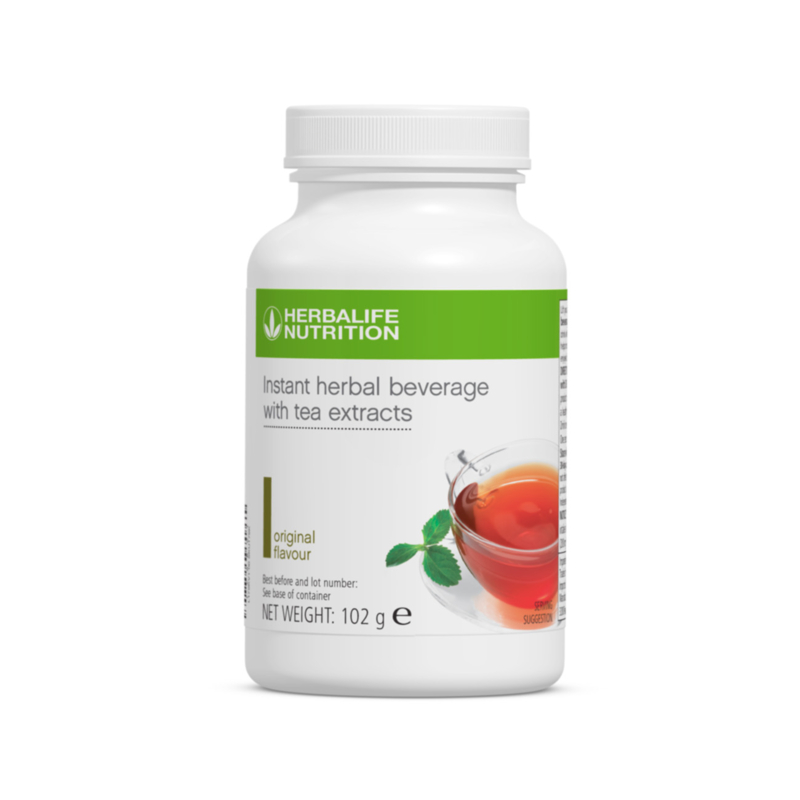
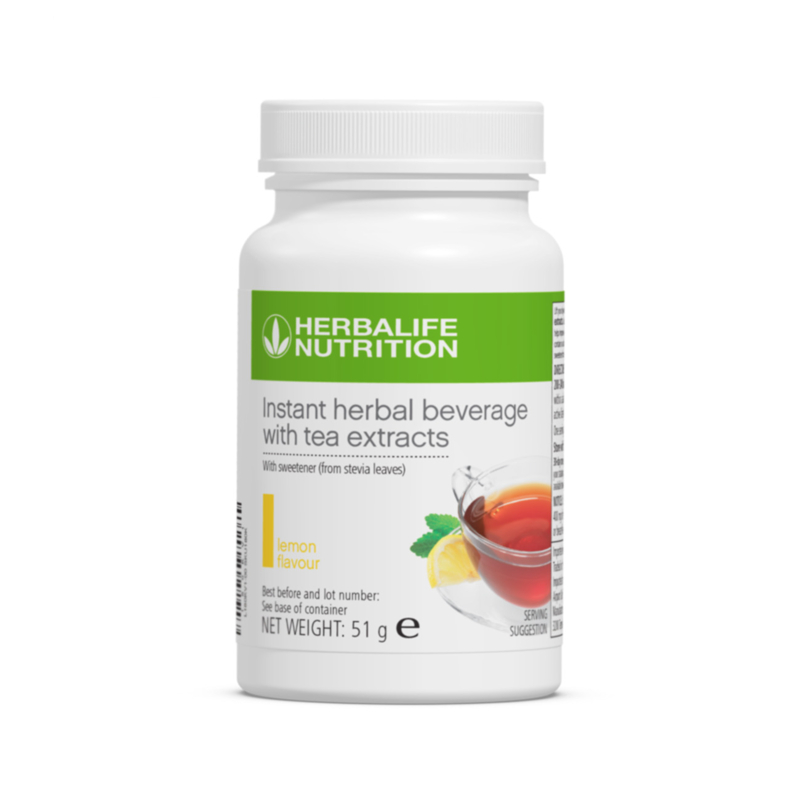
- 5 UK flavours: Original (51g and 102g), Lemon, Peach, Raspberry, and Mango Dragon Fruit.
- Gluten-free and made from plant-derived ingredients (suitable for vegetarians and vegans).
- Pregnancy/breastfeeding: NHS and EFSA both recommend a 200mg/day caffeine limit — one serving is about 44% of that limit. See our dedicated pregnancy and breastfeeding guide.
On this page
- What’s Actually Authorised: Alertness, Not Fat-Burning
- The Four Botanical Ingredients
- Caffeine Content and EFSA Safety
- Full Nutritional Information
- Every UK Flavour, Compared
- How to Prepare Herbalife Tea
- Pregnancy, Breastfeeding and Children
- Vegetarian, Vegan and Gluten-Free Status
- Frequently Asked Questions
- Sources & References
What’s Actually Authorised: Alertness, Not Fat-Burning
Herbalife’s own official product description states the caffeine in this drink is “formulated to help improve alertness and concentration.” That is the specific claim behind this product, authorised on the GB Nutrition and Health Claims Register: caffeine contributes to increased alertness and to the reduction of tiredness and fatigue.
A common inaccuracy worth correcting directly: Herbalife Tea is sometimes described online as boosting “metabolism,” “thermogenesis” or “fat oxidation,” or as a “Turbo Drink” or “Fat Stripper” for burning belly fat. None of this is an authorised claim, and this article does not repeat it. The tea’s role is limited to what’s stated above: alertness and reduced tiredness, at 6 calories per serving.
The Four Botanical Ingredients
Herbalife Tea’s base formula combines four plant-derived ingredients, each contributing a different part of the flavour and caffeine profile.
Green Tea Extract (Camellia sinensis)
Water-extracted, providing catechins (a type of plant antioxidant) alongside part of the caffeine content. Makes up 17.7% of the formula.
Orange Pekoe Black Tea Extract
A black tea extract (4.7% of the formula) contributing the remainder of the caffeine and a fuller tea flavour.
Hibiscus Flower Powder
Contributes colour and a tart flavour note; commonly used in herbal tea blends.
Cardamom Seed Extract
A traditional spice extract contributing to the blend’s aromatic flavour profile.
Green tea catechins and their general antioxidant properties are well documented in independent nutrition research. That is background science about the ingredient category, not a claim this article makes about Herbalife Tea’s own effects — the product’s own authorised claim relates only to caffeine and alertness.
Caffeine Content and EFSA Safety
Each 1.7g serving provides 87.5mg of caffeine. For context, this sits in a broadly similar range to a single espresso shot (roughly 60-80mg) or a cup of instant coffee (roughly 60-100mg), though actual coffee caffeine content varies widely by bean, roast and preparation.
Per EFSA’s 2015 scientific opinion on caffeine safety, a single dose of up to 200mg does not raise safety concerns for healthy adults, and total daily intake from all sources should not exceed 400mg (200mg for pregnant or breastfeeding women). Two servings of Herbalife Tea (175mg) stay under the single-dose threshold; total daily caffeine from tea, coffee and other sources should be tracked against the 400mg limit.
Full Nutritional Information
Per serving (1.7g), consistent across flavours.
| Nutrient | Per 100g | Per 1.7g Serving |
|---|---|---|
| Energy | 1483kJ (354kcal) | 25kJ (6kcal) |
| Fat | 0g | 0g |
| Carbohydrate | 82g | 1g |
| of which sugars | ~5.9g | ~0.1g |
| Protein | 13g | 0g |
| Salt | 0.15g | 0g |
| Caffeine | — | 87.5mg |
Sugar content is naturally occurring; stevia-sweetened variants (Lemon, Peach, Raspberry, Mango Dragon Fruit) contain no added sugar.
Every UK Flavour, Compared
All five flavours share the same base formula, caffeine content and calorie count — only the flavouring and, in most cases, a stevia sweetener differ.
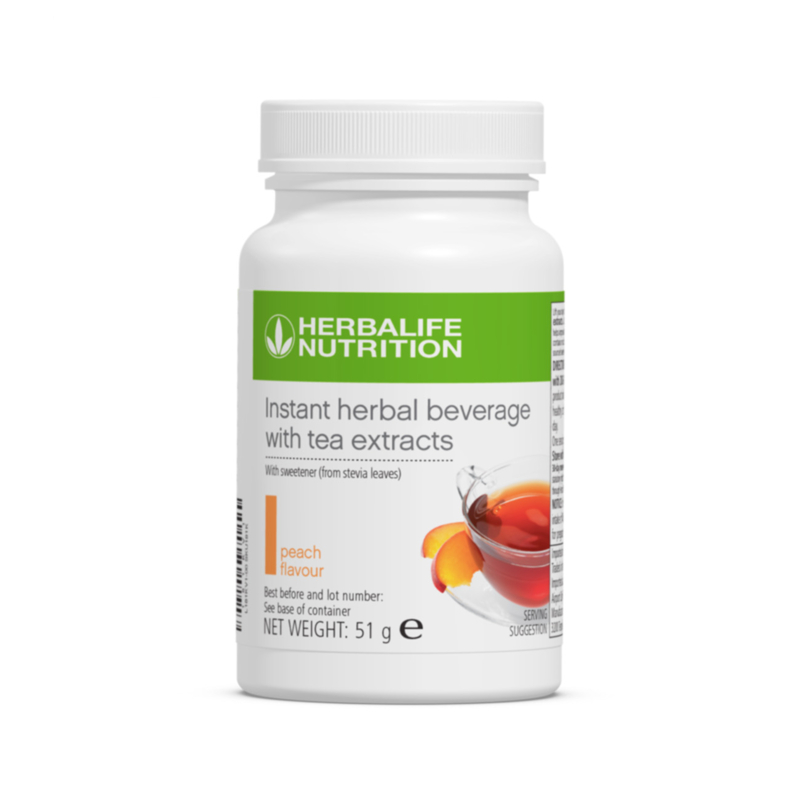
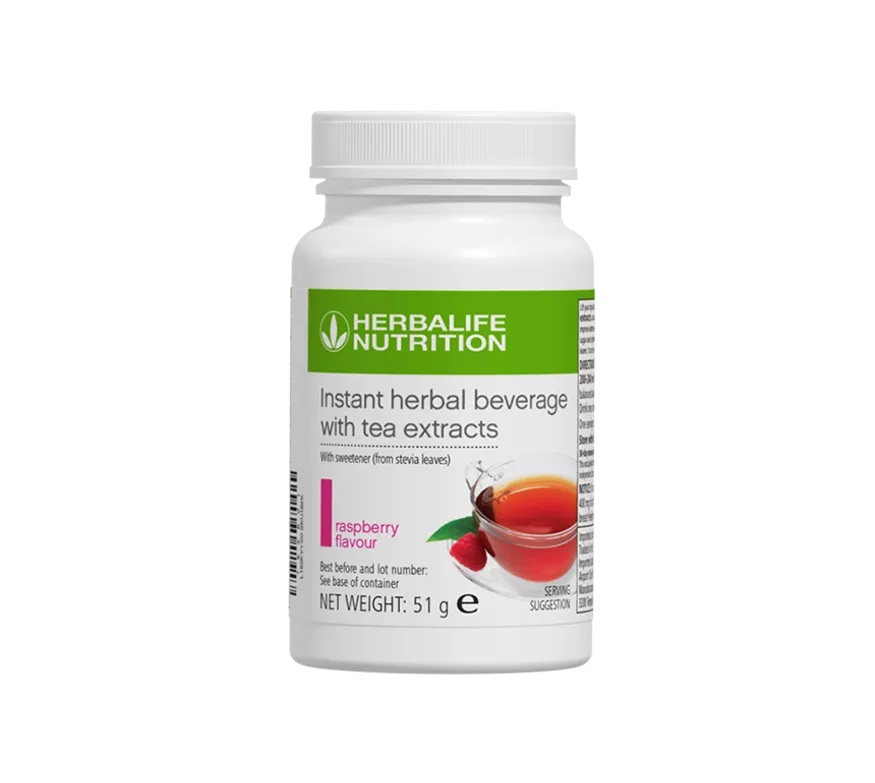
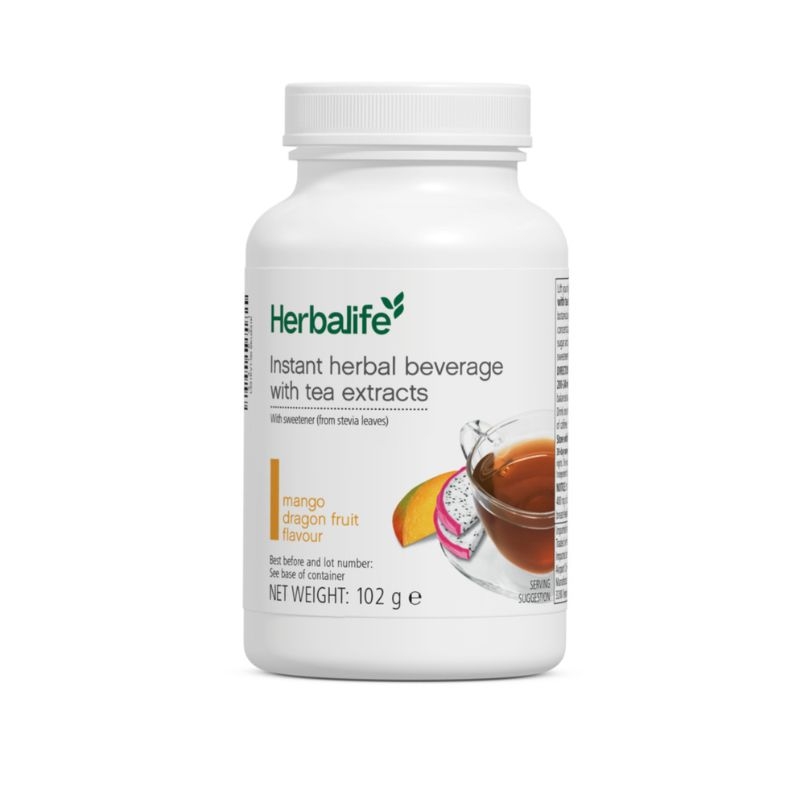
Mango Dragon Fruit (102g)
A tropical-flavoured variant, sweetened with stevia, in the larger 60-serving size.
View Product →How to Prepare Herbalife Tea
Mix ½ teaspoon (approximately 1.7g) with 200-240ml of hot or cold water. It can be enjoyed hot or cold, and the label suggests one or two glasses a day, within a balanced and varied diet and an active lifestyle.
Pregnancy, Breastfeeding and Children
The UK label states that daily caffeine intake from all sources should not exceed 400mg (200mg for pregnant or breastfeeding women), and that a single dose should not exceed 200mg. One serving of Herbalife Tea (87.5mg) represents about 44% of the 200mg pregnancy limit on its own, before counting any other caffeine source that day. For a full breakdown of Herbalife’s official guidance and NHS pregnancy nutrition advice, see our dedicated pregnancy and breastfeeding guide.
Vegetarian, Vegan and Gluten-Free Status
Herbalife Tea is gluten-free, as stated on the UK label. All of its ingredients are plant-derived, making it suitable for vegetarians and vegans.
Frequently Asked Questions
Does Herbalife Tea burn fat or boost metabolism?
No authorised claim links Herbalife Tea to fat burning or metabolism. Its authorised claim is that caffeine helps improve alertness and concentration.
How much caffeine is in Herbalife Tea?
87.5mg per 1.7g serving, consistent across all five flavours.
Is Herbalife Tea safe to drink every day?
The label recommends one or two servings a day. As long as total daily caffeine from all sources (tea, coffee, chocolate, etc.) stays within the EFSA-recommended 400mg limit, daily use is considered safe for healthy adults.
Can I drink Herbalife Tea while pregnant?
One serving provides about 44% of the 200mg daily caffeine limit recommended for pregnant women. See our dedicated pregnancy and breastfeeding guide for full details and official sources.
Is Herbalife Tea gluten-free and vegan?
Yes to both. It’s labelled gluten-free, and all ingredients are plant-derived.
What’s the difference between the Herbalife Tea flavours?
All five flavours share the same base tea formula, caffeine content and calorie count. Only the added flavouring differs — Original has none, while Lemon, Peach, Raspberry and Mango Dragon Fruit add fruit flavouring and a stevia sweetener.
How does Herbalife Tea compare to regular coffee?
At 87.5mg per serving, it’s broadly comparable to a single espresso shot or a cup of instant coffee, though actual coffee caffeine content varies by bean and preparation method.
Sources & References
- Herbalife official product page for Instant Herbal Beverage with Tea Extracts.
- GB Nutrition and Health Claims (NHC) Register — caffeine, alertness and reduction of tiredness and fatigue.
- EFSA Panel on Dietetic Products, Nutrition and Allergies (NDA). Scientific Opinion on the safety of caffeine. EFSA Journal 2015;13(5):4102.
- Official Herbalife UK product labels for Original, Lemon, Peach, Raspberry, Mango Dragon Fruit and 102g Original variants.
Related Reading
Want More Herbalife Guides Like This?
Explore the full library of UK product guides, comparisons and how-tos.
Browse All Articles →