
Herbalife Formula 1 Shake: Ingredients, Calories, Nutrition and How to Use (UK Guide)
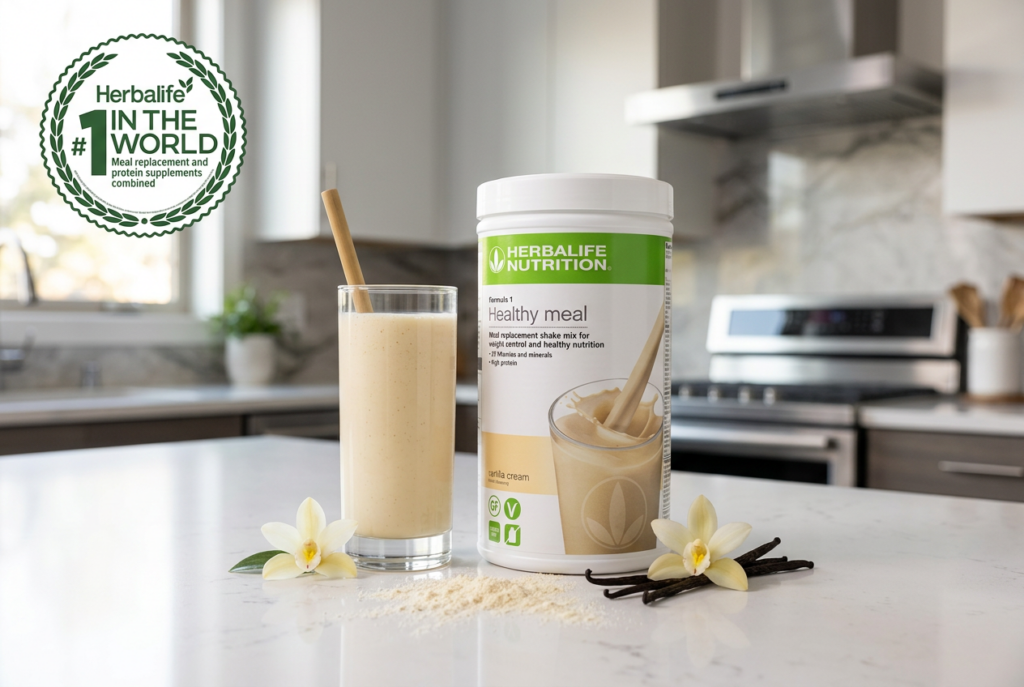
Herbalife Formula 1 is a soy-protein-based shake mix sold as a meal replacement for weight control. One serving is two level scoops (26 g) mixed with 250 ml of cold semi-skimmed milk, which gives 227 kcal, 18 g of protein and 5 g of fibre according to the UK label for Vanilla Cream 550 g. This guide covers the ingredients, the full nutrition and vitamin data from the label, what the weight-control wording means in UK law, how to prepare the shake, and the questions people ask most often.
Quick Summary
- What it is: A soy-protein shake mix. The UK label states it is made of vegan-sourced ingredients, is gluten free and contains no artificial colours or flavours.
- Scoop size: Two level scoops (26g) per shake. A 550g canister contains 21 servings.
- Per serving (26g + 250ml semi-skimmed milk): 227 kcal, 18g protein, 5g fibre, 21g carbohydrate (18g sugars, of which 12g come from the milk).
- Main ingredients: Soy protein isolate, fructose, inulin, gluten-free oat fibre and soy oil, with 25 vitamins and minerals. Contains soy, and milk when prepared with milk. Full ingredient list.
- Label wording for weight control: Substituting two of the main daily meals of an energy-restricted diet with meal replacements contributes to weight loss; substituting one contributes to the maintenance of weight after weight loss.
- Before you start: The label advises consulting a physician before beginning any weight management programme. Formula 1 is intended for use with other foods and regular physical activity, not as a sole source of nutrition.
On this page
What Is Formula 1?
Formula 1 Healthy Meal is Herbalife’s core shake mix: a powder made mainly from soy protein isolate, fructose, inulin, gluten-free oat fibre and soy oil, blended with 25 vitamins and minerals. Mixed with 250ml of semi-skimmed milk, one serving (26g, two scoops) provides 227 kcal and 18g of protein. The Vanilla Cream label describes the product as made of vegan-sourced ingredients, gluten free, with no artificial colours or flavours. Other flavours have their own labels, so check the one you are buying. Our Formula 1 flavours guide compares them.
Unlike a general protein powder, Formula 1 is labelled as a meal replacement for weight control. That wording is only allowed for products that meet set conditions on calories, fat, protein and micronutrients, explained further down.
Formula 1 Ingredients
This is the full ingredient list as printed on the official UK label for Formula 1 Healthy Meal Vanilla Cream 550g:
Soy protein isolate, fructose, inulin, gluten-free oat fibre, soy oil, minerals mixture (calcium citrate, magnesium oxide, ferrous fumarate, sodium selenite, zinc oxide, manganese carbonate, chromium (III) chloride, potassium iodide, cupric citrate), potassium phosphate, emulsifier (soy lecithin), flaxseed powder, thickeners (xanthan gum, guar gum), natural flavouring, vitamins mixture (L-ascorbic acid (Vit. C), DL-alpha-tocopheryl acetate (Vit. E), nicotinamide (Niacin), retinyl acetate (Vit. A), D-biotin (Biotin), calcium D-pantothenate (Pantothenic acid), cholecalciferol (Vit. D), pteroylmonoglutamic acid (Folic acid), phylloquinone (Vit. K), pyridoxine hydrochloride (Vit. B6), thiamin hydrochloride (Vit. B1), cyanocobalamin (Vit. B12), riboflavin (Vit. B2)), sodium chloride, colour (beta-carotene), sweetener (steviol glycosides from stevia), papaya fruit powder, parsley herb powder, blueberry fruit powder, pomegranate fruit powder, anti-caking agent (silicon dioxide). Sweetener from natural source.
Allergens: the powder contains soy (soy protein isolate, soy oil and soy lecithin), and the shake contains milk when prepared with milk. The oat fibre is labelled gluten free. Allergens are shown in bold on the label itself, and recipes can change, so always read the label on the canister in your hand.
What “Meal Replacement for Weight Control” Means
“Meal replacement for weight control” is a defined category in UK food law, not a marketing phrase. Its two authorised statements are listed on the Great Britain Nutrition and Health Claims (NHC) Register, and the same wording appears on the Formula 1 label:
- Two meals: “Substituting two of the main daily meals of an energy restricted diet with meal replacements contributes to weight loss.”
- One meal: “Substituting one of the main daily meals of an energy restricted diet with a meal replacement contributes to the maintenance of weight after weight loss.”
The statements may only be used for products that meet conditions set out in Regulation (EU) No 432/2012, as amended by Regulation (EU) 2016/1413. In summary, a serving must provide between 200 and 250 kcal, no more than 30% of its energy from fat, 25 to 50% of its energy from protein, and at least 30% of the reference intakes for the required vitamins and minerals. The older Directive 96/8/EC, which used to set these rules, stopped applying to these products from 20 July 2016, and its conditions now sit in the claims regulation.
You can compare the Vanilla Cream label with those conditions yourself. A serving with semi-skimmed milk gives 227 kcal. Its 6.6g of fat is about 26% of that energy, and its 18g of protein is about 32% (calculated from the label values at 9 kcal per gram of fat and 4 kcal per gram of protein). The label lists each of the 25 vitamins and minerals at between 38% and 67% of the Reference Intake.
What sets a meal replacement apart from a general protein shake: not the marketing, but the conditions above on calories per serving, fat, protein and micronutrient levels. A general protein powder does not have to meet them, which is why the two are not interchangeable when the goal is a meal substitute rather than a protein top-up.
Nutritional Science: Protein & Fibre
Soy Protein Isolate and the PDCAAS Score
Protein quality is commonly measured using the Protein Digestibility Corrected Amino Acid Score (PDCAAS). Soy protein isolate is one of the few plant-based proteins to reach the maximum score of 1.0, the same top rating given to whey and egg protein, because it supplies all nine essential amino acids the body cannot make on its own. Soy protein isolate is the first ingredient in Formula 1, and the powder provides 35g of protein per 100g.
Protein is also studied in relation to satiety, including gut hormones such as cholecystokinin (CCK) and GLP-1. How full any one person feels depends on many factors, so this guide makes no claim about how full a shake will keep you.
The Fibre Matrix: Inulin and Oat Fibre
UK dietary fibre intake commonly falls short of the recommended 30g a day. Formula 1 provides 5g of fibre per prepared serving (18g per 100g of powder) from two sources: inulin, a soluble fibre, and gluten-free oat fibre. If you are not used to a higher-fibre diet, the label’s advice to maintain adequate fluid intake is worth following.
Complete Nutritional Data
Figures below are transcribed directly from the official UK product label, for 26g of powder mixed with 250ml of semi-skimmed milk (1.5% fat).
| Nutrient | Per 100g powder | Per 26g + 250ml milk |
|---|---|---|
| Energy | 1664 kJ (398 kcal) | 953 kJ (227 kcal) |
| Fat | 9.7 g | 6.6 g |
| – of which saturates | 1.6 g | 3.0 g |
| Carbohydrate | 33 g | 21 g |
| – of which sugars | 23 g | 18 g (12 g from milk) |
| Fibre | 18 g | 5.0 g |
| Protein | 35 g | 18 g |
| Salt | 1.2 g | 0.6 g |
Prepared with 250ml of fortified soy beverage instead of milk, the label gives 214 kcal (897 kJ), 6.3g fat, 0.9g saturates, 21g carbohydrate (15g sugars, 9g from the soy beverage), 5g fibre, 16g protein and 0.6g salt per serving. Every vitamin and mineral on the label is listed in the next section.
25 Vitamins & Minerals
A calorie-controlled diet can supply enough energy but too little of the micronutrients the body needs. Formula 1 provides 25 vitamins and minerals in a reduced-calorie serving. The table shows every value from the Vanilla Cream label for 26g of powder with 250ml of semi-skimmed milk, so the amounts include nutrients contributed by the milk.
| Nutrient | Per 26g + 250ml milk | % RI |
|---|---|---|
| Vitamin A | 312 µg RE | 39% |
| Vitamin C | 35 mg | 44% |
| Vitamin D | 2.1 µg | 42% |
| Vitamin E | 5.1 mg α-TE | 43% |
| Vitamin K | 31 µg | 41% |
| Thiamin (B1) | 0.42 mg | 38% |
| Riboflavin (B2) | 0.55 mg | 39% |
| Niacin | 6.5 mg NE | 41% |
| Vitamin B6 | 0.56 mg | 40% |
| Folic acid | 75.8 µg | 38% |
| Vitamin B12 | 1.3 µg | 52% |
| Biotin | 28 µg | 56% |
| Pantothenic acid | 2.7 mg | 45% |
| Potassium | 768 mg | 38% |
| Calcium | 423 mg | 53% |
| Phosphorus | 466 mg | 67% |
| Magnesium | 143 mg | 38% |
| Iron | 5.8 mg | 41% |
| Zinc | 3.9 mg | 39% |
| Copper | 0.47 mg | 47% |
| Manganese | 0.86 mg | 43% |
| Selenium | 31 µg | 56% |
| Chromium | 21 µg | 53% |
| Molybdenum | 31 µg | 62% |
| Iodine | 68.3 µg | 46% |
Some of these nutrients have authorised health claims on the GB NHC Register, which apply to foods that are at least a source of the nutrient:
- Chromium contributes to the maintenance of normal blood glucose levels.
- Thiamin, riboflavin, niacin, vitamin B6, vitamin B12, biotin, pantothenic acid and vitamin C each contribute to normal energy-yielding metabolism.
- Riboflavin, niacin, vitamin B6, vitamin B12, pantothenic acid, folate and vitamin C each contribute to the reduction of tiredness and fatigue.
- Vitamins A, C and D, zinc and selenium each contribute to the normal function of the immune system.
Quality Control
According to Herbalife’s own manufacturing documentation, the company applies a quality programme it calls “Seed to Feed®,” which includes botanical identification testing of raw plant ingredients and screening for heavy metals, pesticide residues and microbial contamination. Herbalife states that each batch undergoes several hundred individual quality checks before release, and that manufacturing facilities operate under Good Manufacturing Practice (GMP) standards. These are manufacturer-disclosed quality processes rather than independently published data, and are noted here for transparency.
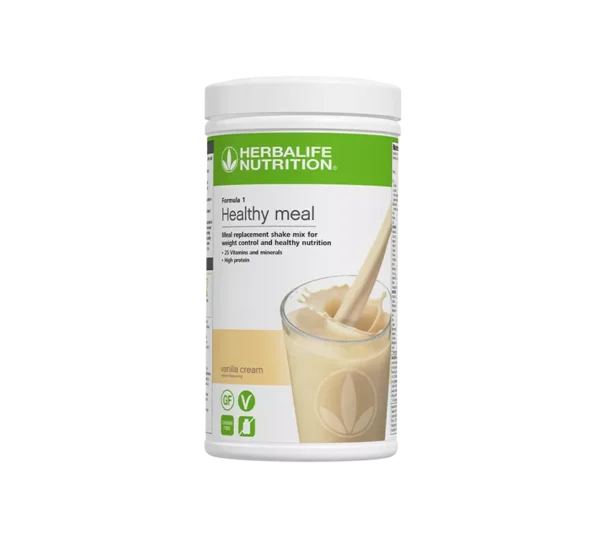
Formula 1 Nutritional Shake Mix — Vanilla Cream 550g
Gluten-free, vegan-sourced meal replacement shake with 18g protein and 25 vitamins & minerals per serving. 21 servings per canister.
- 227 kcal with milk
- 18g protein
- 5g fibre
Flavours & Recipes
The UK range includes Vanilla Cream, Smooth Chocolate, Strawberry Delight, Banana Cream and others, and each flavour has its own label. See our Formula 1 flavours guide for a side-by-side comparison, and our Formula 1 shake recipes for ideas beyond the standard shake.
Formula 1 can also be used as an ingredient:
- Protein porridge: Stir a serving of Vanilla or Chocolate Formula 1 into cooked oats for a higher-protein breakfast.
- Protein Drink Mix option: The label suggests Formula 1 with Protein Drink Mix and water for people who do not want to use milk or a soy beverage. The Formula 1 label gives no nutrition values for that combination, so check the Protein Drink Mix label for its figures.
- Shake bowl: A thicker shake topped with berries, flaxseed and yoghurt for a more textured breakfast.
How to Prepare Formula 1: Scoop Size, Calories and Timing
Per the label directions, mix two level scoops (26g) of powder with 250ml of cold semi-skimmed milk (1.5% fat). For a vegan-friendly, naturally lactose-free shake, use 250ml of fortified soy beverage instead.
| Preparation | Calories | Protein | Label description |
|---|---|---|---|
| 26g + 250ml semi-skimmed milk | 227 kcal (953 kJ) | 18g | Standard preparation |
| 26g + 250ml fortified soy beverage | 214 kcal (897 kJ) | 16g | Vegan friendly, naturally lactose free |
The powder on its own provides 398 kcal per 100g, which works out at about 103 kcal for a 26g serving before any liquid is added (calculated from the label’s per-100g value).
- For weight control: The label says to replace two meals per day with a Formula 1 drink and take one balanced meal, as part of an energy-restricted diet.
- For weight maintenance: The label says to replace one meal per day with a Formula 1 drink and eat two balanced meals.
- Preparation: Gently shake the canister before each use, as the contents may settle. Mix two level scoops (26g) with the liquid and shake or blend until smooth.
- Hydration: The label asks you to maintain adequate fluid intake.
Many people use Formula 1 as a quick breakfast. The label does not give a preferred time of day, so there is no single correct time to have it. It also suggests meeting your daily calorie goals by eating nutritious snacks.
Related Reading
Frequently Asked Questions
How many scoops of Herbalife Formula 1 per shake?
Two level scoops (26g) mixed with 250ml of cold semi-skimmed milk (1.5% fat), or with 250ml of fortified soy beverage, as stated on the label. A 550g canister contains 21 servings.
How many calories are in a Formula 1 shake?
Prepared with 250ml of semi-skimmed milk, a Formula 1 Vanilla Cream shake provides 227 kcal (953 kJ) and 18g of protein. With 250ml of fortified soy beverage it provides 214 kcal (897 kJ) and 16g of protein. The two scoops of powder alone (26g) are about 103 kcal, calculated from the label’s 398 kcal per 100g.
What are the ingredients in Herbalife Formula 1?
In label order the main ingredients are soy protein isolate, fructose, inulin, gluten-free oat fibre and soy oil, followed by a minerals mixture, potassium phosphate, soy lecithin, flaxseed powder, thickeners, natural flavouring, a vitamins mixture and fruit and herb powders. The full list is in the ingredients section above.
Does Formula 1 contain sugar?
Yes. The Vanilla Cream powder has 23g of sugars per 100g. A serving prepared with 250ml of semi-skimmed milk has 18g of sugars, of which the label says 12g come from the milk, which leaves about 6g from the powder. Prepared with fortified soy beverage it has 15g of sugars, 9g of them from the soy beverage. Fructose is the second ingredient, and the label also lists steviol glycosides from stevia as a sweetener.
Where does the protein in Formula 1 come from?
Soy protein isolate is the first ingredient, and the powder provides 35g of protein per 100g. A prepared serving gives 18g of protein with semi-skimmed milk or 16g with fortified soy beverage, so part of the total comes from the liquid. Soy is an allergen.
Does Formula 1 help with weight loss?
The label carries two authorised statements: substituting two of the main daily meals of an energy-restricted diet with meal replacements contributes to weight loss, and substituting one contributes to the maintenance of weight after weight loss. They apply to the diet as a whole. The label says Formula 1 is intended for use with other foods and regular physical activity, and Herbalife advises consulting a physician before beginning any weight management programme.
Can Formula 1 be prepared with water instead of milk?
The label directions use cold semi-skimmed milk or fortified soy beverage. For people who do not want either, the label suggests trying Formula 1 with Protein Drink Mix and water. It gives no nutrition values for that combination, so check the Protein Drink Mix label.
How long does a 550g canister last?
A 550g canister contains 21 servings of 26g. If you prepare two shakes a day it lasts about 10 days, and with one shake a day it lasts about 3 weeks.
Is Formula 1 suitable for people with Type 2 diabetes?
Formula 1 contains chromium, which has an authorised claim relating to the maintenance of normal blood glucose levels. A prepared serving also contains 21g of carbohydrate, including 18g of sugars when made with semi-skimmed milk. Glucose management differs from person to person, so speak to your doctor or diabetes team before using any meal replacement.
How does a meal replacement compare to a protein powder or a “meal in a bottle” product?
To carry the weight-control statements, a meal replacement must meet set conditions on calories per serving (200 to 250 kcal), fat, protein and vitamin and mineral levels. A general protein powder or a higher-calorie all-in-one food is not covered by those conditions, so it serves a different purpose. Check each product’s own label.
Do I need to exercise while using Formula 1?
The label says the product is intended for use as part of an energy-restricted diet and with other foodstuffs, in conjunction with regular physical activity. It adds that a healthy weight management programme includes modest calorie intake, a balanced diet and regular physical activity.
Is Formula 1 safe during pregnancy or breastfeeding?
Formula 1 should not be used as a weight-loss tool during pregnancy or breastfeeding, because energy and nutrient needs are different in this period. Speak to your midwife or GP before using any meal replacement. Our pregnancy and breastfeeding guide explains what Herbalife and the NHS say.
Is Formula 1 vegan and gluten free?
The Vanilla Cream label states that Formula 1 is made of ingredients that are vegan sourced, is gluten free and contains no artificial colours or flavours. Prepared with fortified soy beverage it is vegan friendly and naturally lactose free. Prepared with semi-skimmed milk it is not vegan. Other flavours have their own labels, so check the one you are buying.
Can children or teenagers use Formula 1?
The label’s weight-control statements relate to an energy-restricted diet, and this guide covers adult use. If you are considering Formula 1 for a child or teenager, speak to their GP first.
Does Formula 1 contain artificial sweeteners like aspartame?
No aspartame appears in the ingredient list. The label lists steviol glycosides from stevia as the sweetener alongside fructose, and states the product contains no artificial colours or flavours.
Is Formula 1 safe after bariatric surgery?
Nutrition after bariatric surgery depends on the individual and the type of surgery. Do not introduce Formula 1 after bariatric surgery without sign-off from your surgical or dietetic team.
Sources & References
- Herbalife UK product label, Formula 1 Healthy Meal Vanilla Cream 550g. herbalife.com
- Herbalife UK product page, Formula 1 Healthy Meal Vanilla Cream 550g. herbalife.com
- Great Britain Nutrition and Health Claims (NHC) Register, GOV.UK. View register
- Commission Regulation (EU) 2016/1413 amending Regulation (EU) No 432/2012 (meal replacements for weight control). legislation.gov.uk
- Calculated values (energy shares of fat and protein, calories of the powder alone, sugars from the powder) use the label values stated in this article.
Want More Herbalife Guides Like This?
Explore the full library of UK product guides, comparisons and how-tos.
Browse All Articles →